
Click Bamboo Flooring: How This DIY-Friendly
Choosing the right material for a new floor involves calculating two distinct costs: the price of the material itself and the expense of hiring a professional crew to install it. Far too often, property owners find a beautiful, sustainable surface that fits their budget, only to realize that the specialized labor required to lay it down doubles the total project invoice.
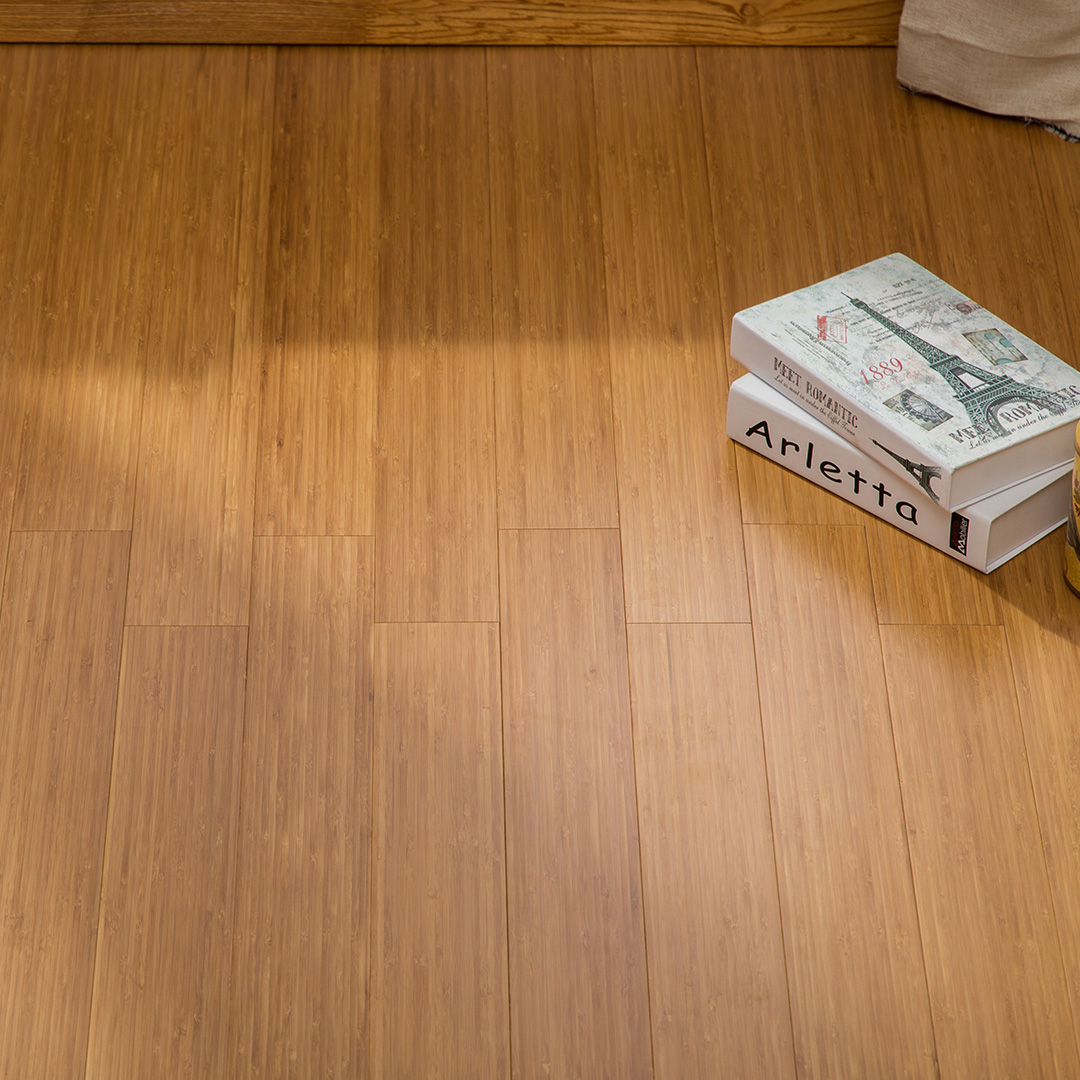
As homeowners and commercial property managers look for ways to maximize their budgets without sacrificing quality, smart building technologies have moved to the forefront of interior design. Among these innovations, click bamboo flooring has emerged as a standout solution. By combining the exceptional durability and eco-friendly benefits of natural bamboo with an ingenious tongue-and-groove locking mechanism, this flooring style allows everyday property owners to bypass expensive contractor fees entirely. Understanding how this interlocking technology works reveals how it can easily save you thousands of dollars on your next renovation project.
The Evolution of Flooring Joining Mechanisms
To appreciate why click-lock profiles are such a major advancement, it helps to understand how hard-surface flooring was traditionally installed for decades.
Standard hardwood and early generations of bamboo products used a basic tongue-and-groove system that required external fastening. Each plank had a protruding ridge on one side and a matching slot on the other. While the pieces fit together like a puzzle, they possessed no internal locking power. To prevent the floor from shifting, separating, or warping under foot, installers had to physically blind-nail or staple every single plank down into a wood subfloor using specialized pneumatic flooring guns. If the subfloor was concrete, installers had to apply heavy, expensive, high-chemical trowel-down adhesives across the entire surface area.
These traditional methods demand immense precision, physical stamina, and an array of expensive tools. A minor mistake in nailing pressure can split a plank, while improper glue application can lead to hollow spots or permanent adhesive stains on the finished wood surface. Consequently, traditional installation is almost always outsourced to professional flooring crews, adding a massive labor surcharge to the final bill.
Click-lock engineering changes the entire dynamic. Instead of a simple straight tongue and groove, the edges of these planks are milled with a highly complex, curved interlocking profile. When two planks are brought together at a specific angle and pressed down, they physically snap into engagement. This create a tight, seamless, mechanical bond that locks the planks along both the long and short edges. Once engaged, the joint resists separating forces without requiring a single nail, staple, or drop of glue.
The Mechanics of a Floating Floor System
The lack of permanent attachment to the subfloor is what categorizes click bamboo as a floating floor system. Instead of being anchored down piece by piece, the entire floor is assembled into a single, cohesive mat that rests smoothly on top of the subfloor underlayment.
This floating design relies entirely on the weight of the collective planks and the friction of the underlying pad to hold it in place. Because wood and grass products naturally expand and contract slightly when indoor relative humidity levels change, a floating floor can move as a single unified unit. As long as a small expansion gap is left around the perimeter of the room underneath the baseboards, the floor stays completely flat, stable, and secure without buckling or gapping.
For a do-it-yourself builder, this floating configuration simplifies subfloor preparation. While traditional glue-down installations require a pristine, completely porous, and chemically neutral concrete slab, a click-lock floating floor can handle minor subfloor imperfections or old tightly adhered vinyl surfaces, provided the subfloor is flat, clean, and dry.
Mapping Out the Cost Savings
When analyzing a professional flooring estimate, the labor cost is often broken down by the square foot, alongside extra line items for specialized tools, adhesives, fasteners, and subfloor prep work. Bypassing a professional installation crew yields immediate financial advantages.
Eliminating Direct Labor Fees
Depending on your geographic location, local labor availability, and the complexity of the room layout, professional contractors charge substantial fees per square foot just to lay down traditional tongue-and-groove planks. For a medium-sized home or a commercial retail space, these baseline labor fees add up rapidly, often matching or exceeding the raw cost of the material itself. Handling the clicking process on a weekend completely deletes this massive expense from your budget.
Avoiding Expensive Specialized Tools
To install a traditional nail-down floor, an installer needs a professional-grade air compressor, specialized heavy-duty flooring nailers, thousands of specific cleats or staples, and a variety of specialized hand tools. Purchasing or renting this equipment eats into project savings. For a click-lock installation, the tool requirements are minimal, consisting primarily of a tape measure, a basic miter saw or hand saw to cut the ends of planks, a rubber mallet, a tapping block, and plastic spacers to maintain perimeter gaps. Most homeowners already own these basic tools, reducing upfront costs to near zero.
Zero Expenditure on Adhesives and Fasteners
High-quality, moisture-cured polyurethane flooring adhesives are expensive. A single bucket can cost hundreds of dollars and only cover a limited surface area. Furthermore, working with liquid flooring glue is messy, requiring specific trowels, disposable gloves, and specialized adhesive removers to clean the surface of the planks afterward. Click technology requires no liquid adhesives whatsoever, saving money and keeping the job site completely dry, clean, and free of toxic chemical fumes.
Step-by-Step DIY Workflow Simplicity
The step-by-step assembly process of a click-lock floor is highly intuitive, allowing people with minimal carpentry experience to achieve professional-grade results.
The process begins by laying down a high-quality flooring underlayment over the clean subfloor. This underlayment is typically a dense foam or felt pad that acts as a moisture vapor barrier, dampens footstep sounds, and smooths out tiny subfloor irregularities.
Once the underlayment is rolled out, the first row of planks is laid down along the longest straight wall, using small plastic spacers to maintain a uniform gap against the drywall. To attach the next plank, you simply insert its tongue into the matching groove of the previous plank at roughly a thirty-degree angle, then gently rotate the plank downward toward the floor. You will hear and feel a distinct click as the joint snaps home.
To connect the next row, the long edge of the entire row is angled into the previous row and locked down. If a joint needs a slight nudge to close up completely seamless, a light tap with a rubber mallet against a protective plastic tapping block ensures a perfect fit without marring the beautiful factory-applied finish of the bamboo. When you reach the far wall, a simple crosscut with a saw finishes the row, and the remaining off-cut piece can often be used to start the next row, minimizing material waste.
Architectural Versatility and Performance
Beyond the financial and logistical benefits of the installation process, click bamboo floors maintain excellent real-world structural performance over time.
Because the milling process requires absolute precision to ensure the locking mechanisms align perfectly, manufacturers use highly stable strand-woven bamboo or advanced engineered cores for their click lines. Strand-woven variations are exceptionally dense, offering incredible resistance to scratches from pet claws, high heels, and heavy furniture.
Furthermore, because a click floor floats on an underlayment, it provides a slightly more forgiving, comfortable walking surface underfoot compared to a hard, unforgiving plank glued directly down to rough concrete. This micro-flexibility reduces body fatigue, making it an excellent choice for kitchens, home workshops, or retail spaces where people spend hours standing on their feet.
Long-Term Asset Value and Disassembly
An overlooked financial benefit of click-lock engineering is its non-permanent nature. If a single plank in the middle of your room suffers severe damage from an accidental drop of a heavy sharp object or a localized plumbing leak, a traditional glued or nailed floor requires a complex, destructive repair process involving wood chisels, circular saws, and precise scraping.
With a click system, the floor can be systematically unclicked from the nearest wall back to the damaged area. The compromised plank can be replaced with a fresh one, and the rest of the floor can be snapped right back together in a matter of hours, with no damage to the subfloor or neighboring planks. This modular flexibility protects your investment for decades to come.
Investing in your property’s infrastructure should be an empowering experience. By choosing a high-quality click-lock bamboo surface, you effectively shift your budget away from expensive, fleeting labor fees and channel those funds directly into a premium, durable material that enhances the aesthetic and intrinsic value of your property for the long haul.
About Bothbest: Bothbest is a professional factory of bamboo flooring in China, dedicated to manufacturing and exporting premium solid and engineered bamboo products worldwide. With advanced production machinery and strict quality control, Bothbest delivers durable, eco-friendly, and precisely crafted flooring solutions tailored to meet global residential and commercial architectural standards.